Currently Empty: $0.00

If you want a fresher-smelling cabin, the choice can range from a simple hanging card to a powered aroma diffuser. Both approaches add fragrance, but they differ in control, upkeep, placement and cost. The better option is the one that suits your vehicle and routine without becoming distracting or overwhelming.
The quick answer
Choose a car aroma diffuser if you value adjustable output, a more consistent scent experience and refill flexibility. Choose a traditional air freshener if you want a low-cost option that requires little setup or maintenance. Neither format removes the source of an odor, so spills, damp materials and food waste should always be cleaned first.
How the two options work
Traditional car air fresheners are usually passive. Hanging cards, gels and scented blocks release fragrance gradually, while vent clips use moving air to spread the scent. They are simple and widely available, but their output can change with airflow and cabin temperature.
Car aroma diffusers may also be passive, but many powered models use controlled airflow or atomization. Depending on the design, they may offer timing modes and several intensity settings. That extra control can make the fragrance feel more predictable, although the device may require charging, refilling and occasional cleaning.
Scent control and consistency
Control is the clearest advantage of a powered diffuser. Starting on a low setting allows you to increase the output only when needed, which is useful in a compact cabin or when passengers have different preferences. Some models pause automatically between cycles, helping to avoid a constant heavy scent.
Traditional products usually offer less adjustment. A vent clip may have a small control, but a hanging card or scented block often releases fragrance continuously. Heat can make passive products smell stronger, especially after a vehicle has been parked in the sun. If you prefer a very subtle result, open packaging gradually when the instructions allow it rather than exposing the full product at once.
Upfront price and ongoing cost
Traditional air fresheners generally cost less at the time of purchase. That makes them practical for occasional use or for shoppers who want to test a fragrance before committing to a device. The trade-off is that the complete product is often replaced when the scent fades.
A refillable diffuser usually costs more initially, but only the compatible fragrance container may need replacement later. Long-term value depends on refill price, how often the device runs and how much fragrance it uses. Compare realistic replacement costs rather than assuming that either format will always be cheaper.
Installation and everyday convenience
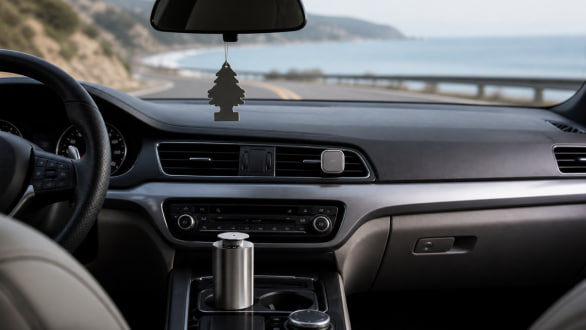
A hanging freshener is quick to install, but it should never obstruct the driver’s view or swing into controls. A vent clip is compact, although it may redirect airflow or place fragrance near surfaces affected by heat or condensation. Always follow the product instructions and keep any accessory clear of airbags and moving controls.
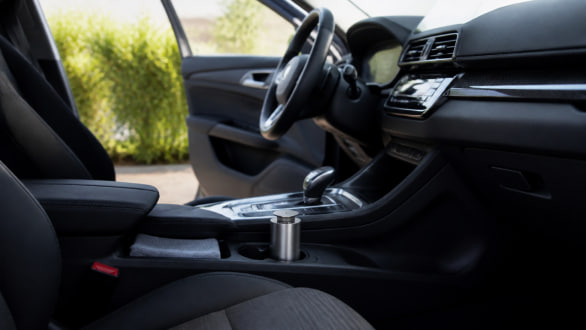
A cup-holder diffuser can feel secure and tidy, but it uses storage space. Powered models may also need a charging cable, so route the cable where it cannot interfere with the gear selector, pedals or occupants. Before buying, check the product dimensions, power method and the location you intend to use.
Maintenance and cleanliness
Traditional air fresheners are usually replaced rather than maintained. Even so, they should be checked for leakage, surface contact or deterioration. Remove a damaged product promptly and clean any residue using guidance suitable for the affected vehicle material.
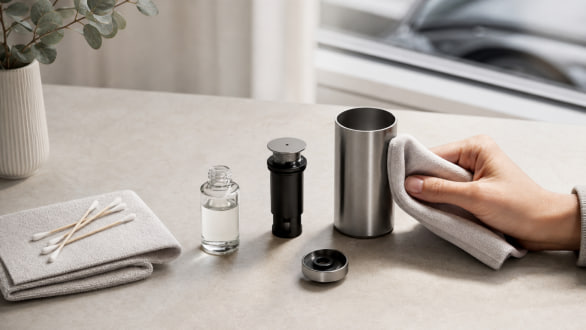
Refillable diffusers need more care. Keep the unit upright, avoid overfilling and wipe the exterior with a soft cloth. When changing fragrances, clean compatible removable parts as directed so old and new scents do not mix. Never immerse powered components or use an unapproved solvent.
Fragrance choice and passenger comfort
Fragrance is personal. A scent that feels light to one person may be too strong for someone else, particularly in a small enclosed space. Start with the lowest practical intensity, ventilate the cabin and consider regular passengers before selecting a fragrance. If anyone experiences discomfort, stop using the product and air out the vehicle.
Use only fragrance materials approved for the specific device. Essential oils and fragrance liquids vary in composition, and an incompatible product may affect seals, plastics or the atomizing system. Keep refills away from children, pets, heat and direct sunlight, and follow every warning on the label.
What about sustainability?
A refillable product may reduce the number of complete units discarded, but that does not automatically make every diffuser the lower-impact choice. Materials, electronics, packaging, refill size and product life all matter. A durable device used for a long time can be a sensible option; a simple passive product may also be reasonable when used infrequently. Choose quality, avoid unnecessary replacement and dispose of components according to local guidance.
Which option fits your routine?
A car aroma diffuser may suit you if:
You want adjustable fragrance intensity, prefer a refillable system, drive frequently or like changing scents while keeping the same device. It is also a strong choice when you are willing to charge and clean the product as recommended.
A traditional air freshener may suit you if:
You want the simplest setup, have a limited budget, use fragrance only occasionally or do not want another powered accessory in the cabin. Choose a placement that is secure, visible to you but not in your field of view, and compatible with the vehicle surface or vent.
How to get better results from either option
Begin with a clean cabin. Remove rubbish, dry damp floor mats, vacuum fabric and address the source of persistent smells. Ventilate before adding fragrance, then use the minimum intensity that feels comfortable. Recheck the product regularly in hot weather, and remove it if you notice leakage, damage or an unusual change in performance.
The verdict
Aroma diffusers offer better control and a more customizable experience; traditional air fresheners offer simplicity and a lower entry price. There is no universal winner. For frequent drivers who care about consistent output, a well-made adjustable diffuser is often the more versatile choice. For occasional fragrance with almost no setup, a traditional product may be enough.
Frequently Asked Questions
Does a car diffuser eliminate odors?
No fragrance product replaces cleaning. It may change how the cabin smells, but odor sources such as spills, damp fabric, smoke residue or spoiled food need to be removed directly.
Can I use any essential oil in a car diffuser?
Only use oils or fragrance liquids specifically approved for your model. An incompatible liquid can clog the fragrance path, damage materials or create leakage.
Which option lasts longer?
Product life varies with temperature, airflow, intensity settings, fragrance volume and driving frequency. Compare the stated refill volume and usage guidance, but expect real-world results to differ.
Is a stronger car fragrance better?
Not necessarily. In a small cabin, a lower setting can feel cleaner and more comfortable. The goal is a subtle background scent, not one that competes for attention.
Explore TUOGA car aroma diffusers for adjustable fragrance control in a compact, modern design.
Editorial References and Update Notes
This section supports internal review and does not need to be published with the articles. Review legal references before entering a new market, because phone-use and windscreen-mounting rules vary by jurisdiction.
Google Search Central – Creating helpful, reliable, people-first content
https://developers.google.com/search/docs/fundamentals/creating-helpful-content
NHTSA – Distracted Driving
https://www.nhtsa.gov/risky-driving/distracted-driving
European Commission – Distraction and road safety
https://road-safety.transport.ec.europa.eu/eu-road-safety-policy/priorities/safe-road-use/archive/distraction_en
GOV.UK – Using a phone, sat nav or other device when driving
https://www.gov.uk/using-mobile-phones-when-driving-the-law
US EPA – Can the use of fragrances indoors cause health impacts?
https://www.epa.gov/asthma/can-use-fragrances-indoors-cause-health-impacts